7 Tips for Choosing the Best Brushless Chainsaw

Time:2026-09-15 Author:Oliver
0%

Choosing the right Brushless Chainsaw is not simply a matter of picking the highest voltage or longest guide bar. Real work exposes weaknesses quickly. A saw that feels balanced beside a garage may feel heavy after twenty minutes of cutting fallen branches. Battery runtime also changes with wood hardness, chain sharpness, and operator pressure. These details matter more than impressive packaging.

Arborist and chainsaw educator Jeff Jepson offers a useful principle: “The best tool is the one that matches the job and the user.” That idea guides the seven tips in this article. We will examine motor efficiency, battery capacity, guide-bar length, chain speed, safety controls, handling comfort, and long-term support. Look closely. A dependable Brushless Chainsaw should start smoothly, stop quickly, and cut without forcing your shoulders forward. Its chain brake should be easy to reach, while the oil reservoir should be simple to inspect near the workbench.

Specifications can mislead. They do. A larger battery may increase runtime, but it can also add noticeable weight. A longer bar may reach wider logs, yet it can reduce control during small pruning tasks. I have found that many buyers focus on power figures and overlook replacement chains, charger availability, and local service. That is an avoidable mistake. Still, no buying guide can predict every user’s needs. Your cutting habits, tree size, storage conditions, and maintenance discipline should shape the final choice. Safety remains non-negotiable: protective equipment, a sharp chain, and responsible operating technique matter as much as the machine itself.
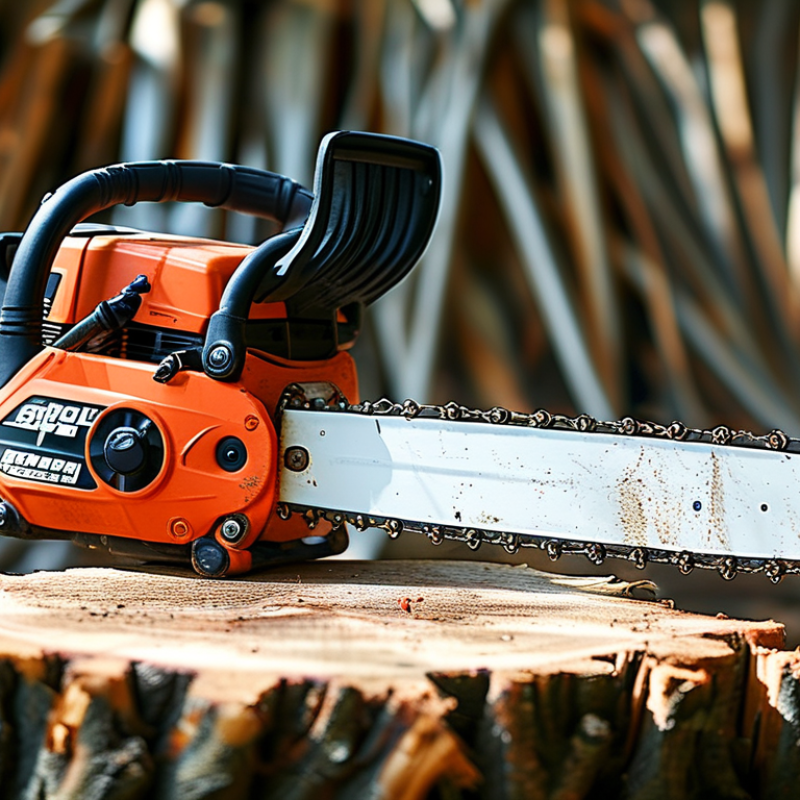
7 Tips for Choosing the Best Brushless Chainsaw

Define Brushless Chainsaw Technology and Its Main Advantages

7 Tips for Choosing the Best Brushless Chainsaw

Brushless chainsaw technology replaces carbon brushes with electronic commutation and permanent magnets. This removes physical contact inside the motor. The result is less friction, reduced heat, and lower maintenance. It also allows precise speed control during cutting. The IEA’s Energy Efficiency 2024 report states that motor-driven systems consume roughly half of global electricity, making motor efficiency a serious design concern.

Tip: Check the motor’s thermal control, not only its voltage. A cool-running motor can deliver steadier performance during repeated cuts.

Tip: Compare usable battery capacity, measured in watt-hours. A larger battery may extend cutting time, but it can also increase weight.

Tip: Test the trigger response. Smooth acceleration helps when trimming thin branches.

A brushless motor does not guarantee maximum cutting power. Chain sharpness, bar length, lubrication, and battery condition still matter. The U.S. Department of Energy’s motor-system guidance emphasizes efficient control and reduced mechanical losses, but real outdoor performance depends on the complete system.

Tip: Look for overload and temperature protection.

Tip: Inspect chain-tension access with gloves on. Small controls can become frustrating in cold weather.

Tip: Choose a balanced handle position before chasing longer runtime.

Tip: Read independent test data, then question it. Cutting hardwood is different from pruning soft, dry limbs. That detail is easy to miss.

Match Bar Length and Cutting Capacity to Your Intended Tasks

A 7 Tips for Choosing the Best Brushless Chainsaw

Bar length should follow the wood, not the advertisement. Measure the wood. A practical field rule is choosing a bar at least 2 inches longer than the typical diameter. The USDA Forest Service chainsaw safety guidance supports maintaining enough bar length for controlled cutting. For a 10-inch branch, a 12-inch bar may work well. Larger logs can require a longer bar, but extra length also increases weight, kickback exposure, and battery demand. Cutting capacity is often smaller than the advertised bar length because the housing and chain tensioner reduce usable reach.

Check the manufacturer’s stated maximum cutting diameter, then compare it with your real tasks. The Consumer Product Safety Commission has reported over 36,000 chainsaw-related injuries treated in U.S. emergency departments annually. That figure makes awkward, forced cuts worth taking seriously. A compact saw suits pruning and small firewood. A mid-length bar offers better control for storm cleanup and moderate logs. I once chose a longer bar for occasional large cuts and disliked the fatigue it caused during ordinary trimming. More capacity was not automatically better.

Battery voltage alone does not define performance. Chain pitch, motor output, chain sharpness, and wood hardness also matter. The European Commission’s EU Ecolabel research notes that product performance depends on both energy use and task efficiency. Keep the chain sharp. Recheck diameter after bark removal. Leave room for a mistake, because real wood rarely cuts as neatly as a test log.

7 Tips for Choosing the Best Brushless Chainsaw - Match Bar Length and Cutting Capacity to Your Intended Tasks

Tip Intended Task Recommended Bar Length Approximate Single-Pass Cutting Capacity Recommended Power and Handling Characteristics Selection Guidance
1 Pruning branches and light garden maintenance 8–10 in (20–25 cm) Approximately 6–8 in (15–20 cm) Compact, lightweight brushless motor; balanced rear or top handle design; low kickback chain Choose a short bar for better control and less fatigue when working above shoulder height or between dense branches.
2 Cutting small limbs, shrubs, and small logs 10–12 in (25–30 cm) Approximately 8–10 in (20–25 cm) Moderate torque, variable-speed trigger, tool-free chain adjustment, automatic chain lubrication A 10–12 inch bar offers a useful balance between maneuverability, runtime, and capacity for routine property work.
3 General firewood cutting and storm cleanup 14–16 in (35–40 cm) Approximately 12–14 in (30–35 cm) High-torque brushless drive, chain brake, metal bucking spikes, and sufficient battery capacity for repeated cuts Select this range when you regularly cut medium-sized branches and logs. The saw should be rated for the selected bar length.
4 Cutting larger logs and processing firewood 16–18 in (40–45 cm) Approximately 14–16 in (35–40 cm) High-output brushless motor, strong chain-speed control, two-battery capability or a high-capacity battery system A longer bar increases reach but also adds weight and energy demand. Confirm that the saw can maintain chain speed under load.
5 Frequent or extended cutting sessions 12–16 in (30–40 cm) Approximately 10–14 in (25–35 cm) Efficient brushless motor, removable battery, rapid charger, overload protection, and visible charge indicator Prioritize watt-hours, cooling performance, and charging time. Battery runtime varies with wood species, diameter, chain sharpness, and cutting technique.
6 Work in noise-sensitive residential areas 10–14 in (25–35 cm) Approximately 8–12 in (20–30 cm) Low-vibration brushless motor, soft-grip handles, low-kickback chain, and controlled startup Use the shortest bar that meets the job. A smaller cutting system generally improves handling and reduces unnecessary energy use.
7 Choosing a versatile all-purpose saw 14 in (35 cm) Approximately 12 in (30 cm) Moderate-to-high torque, chain brake, tool-free tensioning, automatic oiling, and a comfortable two-handle layout A 14-inch bar is a practical compromise for pruning, cleanup, and medium firewood when one saw must cover several tasks.
Important: Cutting capacity figures are approximate working estimates, not guaranteed specifications. Actual performance depends on motor output, battery voltage and capacity, chain pitch, chain sharpness, wood species, moisture content, operator technique, and the manufacturer’s approved bar length. Always use the safety equipment and operating procedures specified in the product manual.

Compare Battery Voltage, Runtime, and Charging Requirements

7 Tips for Choosing the Best Brushless Chainsaw

Compare Battery Voltage, Runtime, and Charging Requirements

Battery voltage is only one part of a chainsaw’s performance. Higher voltage can support stronger cutting under heavy load. It may also increase pack weight and purchase cost. Check watt-hours, calculated by multiplying volts by amp-hours. A 40-volt, 5-amp-hour battery stores about 200 watt-hours. That figure allows fairer comparisons between different models.

Runtime depends on wood diameter, chain sharpness, temperature, and cutting pressure. The U.S. Department of Energy’s 2023 Energy Storage Grand Challenge Roadmap reports lithium-ion systems commonly achieve 85–95% round-trip efficiency in controlled applications. A chainsaw will perform differently. Real cutting losses are higher. Treat advertised cut counts as laboratory estimates, not promises. Short bursts consume less energy than continuous cutting. Hard, wet wood drains batteries faster.

Charging requirements deserve equal attention. Review charging time, charger output, and battery temperature limits. The International Energy Agency’s Global EV Outlook 2024 notes that charging speed depends strongly on battery temperature and charging infrastructure. Smaller outdoor-tool packs face similar limitations. Never judge a charger by its connector alone. I would choose a slower charger if it protects battery life and fits my work schedule. Still, this preference may fail during long jobs. One spare pack can matter more than a higher voltage rating. Keep batteries dry, cool, and away from direct sunlight. Check the manual before charging after cold-weather use.

Evaluate Safety Features, Comfort, Weight, and Handling

7 Tips for Choosing the Best Brushless Chainsaw

Safety should lead your evaluation, not motor power. CDC/NIOSH reports that chainsaw injuries send about 36,000 people to U.S. emergency departments annually. Choose a model with a reliable chain brake, hand guard, trigger lockout, and low-kickback chain. Automatic chain lubrication also supports steadier cutting. Test every control while wearing gloves. Awkward switches become dangerous when your hands are cold or tired.

Weight is only one part of comfort. A battery can make a light saw feel nose-heavy. Hold the saw at waist height, then check whether the bar naturally stays level. Your wrists should not fight the tool. Look for padded handles, balanced housing, and low vibration. The National Institute for Occupational Safety and Health links vibration exposure with hand-arm discomfort and circulation problems. Short cuts still matter.

Handling reveals weaknesses quickly. Walk with the saw switched off and keep the bar behind you. Engage the brake before changing position. During a test cut, notice whether the chain stalls, pulls sideways, or forces your shoulders upward. A heavier model may feel steadier, but it can become exhausting above shoulder height. I once overvalued runtime and ignored balance. That was a poor judgment. Weight figures also vary by battery configuration, so compare complete operating weight, not the bare tool. (Sources: CDC/NIOSH Chainsaw Safety; NIOSH Hand-Arm Vibration guidance.)

7 Tips for Choosing the Best Brushless Chainsaw

Use this suggested evaluation weighting to compare brushless chainsaws. Safety receives the highest priority, followed by comfort, handling, weight, and cutting performance.

How to use the chart: Check features such as a chain brake, hand guard, trigger lock, low-kickback chain, and automatic chain lubrication. Also compare overall weight with the battery installed, handle comfort, balance, vibration control, and ease of chain adjustment.

Check Durability, Maintenance Needs, Warranty, and Overall Value

7 Tips for Choosing the Best Brushless Chainsaw

Choosing the best brushless chainsaw requires more than comparing cutting speed. In field use, durability appears in small details: a rigid housing, sealed controls, and a balanced metal guide bar. Check fastener alignment and battery contact points before buying. Loose fittings can worsen after repeated vibration. That happened to me once. A bright display cannot repair weak construction. Look closely.

Maintenance should fit your working habits. Brushless motors reduce some wear, but they do not make a saw maintenance-free. Clean sap from the bar groove, inspect chain tension, and remove debris after each session. Keep the chain sharp. A dull chain strains the motor and drains the battery quickly. I used to delay sharpening, thinking occasional work caused no harm. It did.

Also examine oil delivery, hand guards, and cooling openings after cutting dusty or resin-heavy wood. The manual should explain these checks clearly, not hide them in vague diagrams.

A useful warranty covers more than the motor. Ask about battery coverage, charger faults, parts availability, and repair procedures. Read exclusions carefully; some warranties reject damage linked to neglected cleaning or incorrect storage. Warranty duration matters, but response time matters too. Overall value includes the purchase price, extra batteries, replacement chains, and likely service costs. A cheaper saw may become expensive when compatible parts are difficult to find. Try the grip with gloves if possible. Comfort is easy to ignore in a store, then painfully obvious after an hour. Pay attention to your actual workload, not optimistic weekend plans.

FAQS

What is brushless chainsaw technology?

It uses permanent magnets and electronic commutation instead of carbon brushes. There is no physical brush contact. This reduces friction, heat, and routine maintenance.

What are the main advantages of a brushless motor?

It can provide smoother speed control and steadier cutting performance. Lower mechanical loss may improve efficiency. However, the motor alone does not decide everything.

Does a brushless motor guarantee stronger cutting power?

No. Chain sharpness, lubrication, bar length, and battery condition remain important. A dull chain can make a powerful saw feel weak. That detail is easy to miss.

How should battery capacity be compared?

Compare usable watt-hours, not only voltage or amp-hours. A larger battery may extend cutting time. It may also make the saw heavier and nose-heavy.

Which safety features should a chainsaw include?

Look for a reliable chain brake, hand guard, trigger lockout, and low-kickback chain. Automatic lubrication can support steadier cutting. Test every control while wearing gloves.

How can I judge comfort and balance?

Hold the saw at waist height and check whether the bar stays level. Your wrists should not fight the tool. Padded handles and low vibration also matter.

What should I check during a test cut?

Notice whether the chain stalls, pulls sideways, or lifts your shoulders. Check trigger response on thin branches. Smooth acceleration feels easier to control.

Should I trust independent cutting tests completely?

Use them as useful evidence, but question the conditions. Hardwood differs from soft, dry limbs. Battery size and complete operating weight can change the result.

How should I handle the saw when moving?

Switch it off and keep the bar behind you. Engage the chain brake before changing position. Never rush this step.

What mistake can happen when choosing a chainsaw?

I once valued runtime and ignored balance. That judgment was poor. A heavier saw may feel stable, then become exhausting above shoulder height.

Conclusion

Choosing the right Brushless Chainsaw starts with understanding its motor technology and practical benefits. A brushless motor generally delivers efficient power, longer service life, reduced maintenance, and improved battery performance compared with traditional designs. Consider the bar length and cutting capacity based on your intended tasks, such as pruning, trimming, or handling larger logs. A longer bar may increase cutting reach, while a shorter one can provide better control and easier handling.

Battery voltage, expected runtime, charging time, and the availability of additional batteries should also influence your decision. Look for useful safety features, comfortable grips, balanced weight, and controls that reduce fatigue during operation. Finally, assess construction quality, chain adjustment requirements, maintenance needs, warranty coverage, and total ownership cost. The best Brushless Chainsaw should provide a practical balance of power, comfort, reliability, safety, and long-term value for your specific cutting needs.

Oliver

Oliver

Oliver is a seasoned marketing professional with a wealth of expertise in driving brand awareness and engagement. With a deep understanding of our company's product offerings, he consistently delivers high-quality content that enriches our professional blog. His insights not only shed light on......