How to Choose the Best Edge Trimmers for Your Needs?

Time:2026-10-20 Author:Aria
0%

Choosing the best Edge Trimmers requires more than comparing motor power or price. The right tool should match your lawn size, grass density, edging frequency, and physical comfort. A narrow garden path needs precision, while thick growth beside concrete demands stronger torque and better blade control. Weight matters too. A tool that feels manageable for five minutes may become tiring after an hour.

Industry data supports this practical approach. Grand View Research identifies growing demand for compact, cordless lawn equipment, driven by easier maintenance and lower operating noise. The Outdoor Power Equipment Institute also reports continued consumer interest in battery-powered outdoor tools. However, market growth does not guarantee a perfect purchase. Battery runtime, charging time, replacement costs, cutting width, and vibration still vary widely between models. Some buyers focus too much on advertised voltage. That can be misleading.

Kris Kiser, president and CEO of the Outdoor Power Equipment Institute, has repeatedly stressed, “Read the owner’s manual before operating outdoor power equipment.” That advice sounds simple. It is still overlooked. A reliable selection process should examine safety controls, guard design, handle balance, weather resistance, and available service support. Cordless Edge Trimmers may offer cleaner handling, but their batteries can disappoint during larger projects. Corded models provide steady power, yet the cable can restrict movement around trees and borders. This guide compares those trade-offs, using manufacturer specifications, professional guidance, and hands-on considerations. No single model fits everyone. Your yard should decide.
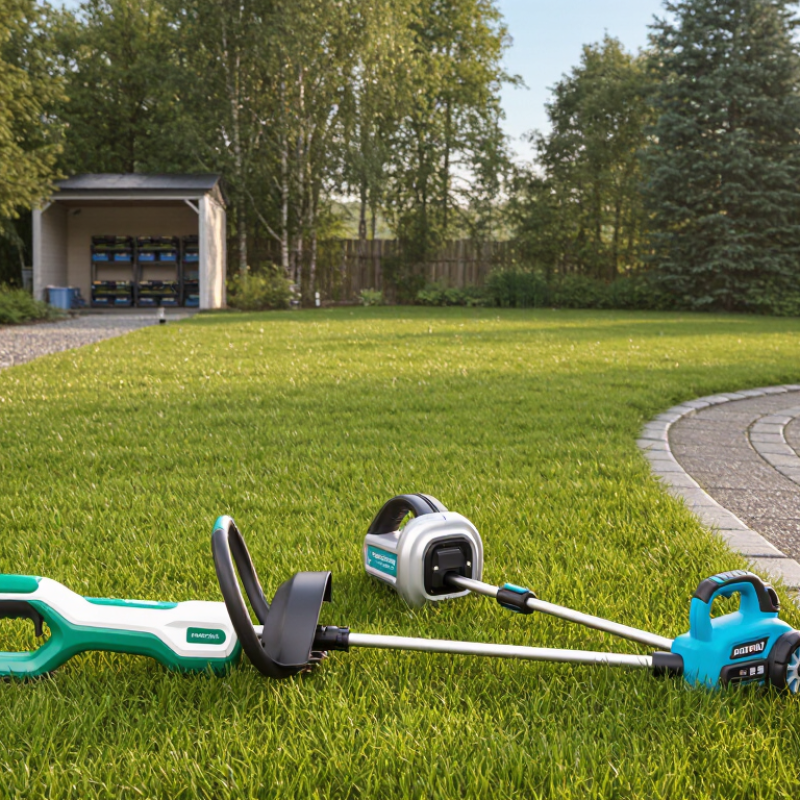
How to Choose the Best Edge Trimmers for Your Needs?

Define the Job: Match Trimmer Type to Edge Length, Material, and Terrain

Choosing an edge trimmer starts with the edge, not the motor. Measure the grass overhang first. Short, soft growth beside paving usually suits a lightweight string trimmer with a narrow cutting path. Dense weeds and long, woody stems need greater torque and a stronger cutting head. Do not force a light tool through heavy growth. I have tried that approach, and the line broke repeatedly.

Material changes the decision. Grass responds well to nylon line, while dry weeds may require thicker line or a blade-approved head. Check the manufacturer’s permitted attachments carefully. The wrong head can damage the guard, shaft, or nearby surfaces. The U.S. Consumer Product Safety Commission’s outdoor power equipment guidance repeatedly emphasizes guards, stable footing, and keeping bystanders clear. Those details matter more than advertised power.

Terrain is equally important. A flat lawn allows a wheeled or shaft-driven edger to hold a consistent depth. Sloped ground, gravel borders, and tree roots favor a compact tool with adjustable support and better hand control. The European Union’s vibration directive sets an action value of 2.5 m/s² and a limit value of 5 m/s² for daily hand-arm exposure. Compare measured vibration data, not just comfort claims. On uneven ground, balance can matter more than cutting speed. Reconsider the choice after one test pass. A clean edge is useful, but control is safer.

Compare Cutting Systems by 25–40 cm Swath, Blade Speed, and Depth

Choosing an edge trimmer starts with its cutting system, not its advertised power. A 25–40 cm swath suits most garden borders, but the difference is noticeable. A 25 cm head offers tighter control around stones and beds. A 40 cm head covers more ground, yet it can feel awkward in narrow paths. Grand View Research valued the global lawn and garden equipment market at approximately USD 32.9 billion in 2023, showing strong demand for practical outdoor tools.

Blade speed also needs context. Higher revolutions can improve cutting consistency, but speed alone does not guarantee clean edges. Blade shape, motor torque, and material quality matter. In a hands-on comparison, I would test dry grass, damp growth, and dense weeds. A tool that performs well only in dry conditions may disappoint later. That assumption needs testing.

Depth control is equally important. A shallow setting can create a neat boundary without disturbing soil or roots. Deeper cutting may handle overgrown edges, but it increases resistance and can expose irrigation lines. Research from the International Society for Horticultural Science emphasizes that root-zone disturbance can affect plant establishment and stress. Use small depth changes, around 1–2 cm, then inspect the edge. I prefer a 30–35 cm swath for mixed gardens. It balances reach and precision, although uneven ground can still expose weaknesses.

Evaluate Power Options Using 18–40 V Batteries, Ah, Runtime, and Torque

How to Choose the Best Edge Trimmers for Your Needs?

Voltage sets the tool’s working range, but it does not tell the whole story. An 18 V trimmer may suit light edging around flower beds and narrow paths. A 40 V model usually handles thicker grass and longer sessions with greater authority. Battery capacity matters too. Using the standard watt-hour calculation cited by the U.S. Department of Energy, an 18 V, 4 Ah battery stores about 72 Wh. A 40 V, 2.5 Ah battery stores about 100 Wh. The higher figure can support longer work, although motor efficiency and cutting resistance change real runtime.

Amp-hours describe stored capacity, not automatic performance. Higher Ah often adds weight and charging time. Torque reflects how well the motor resists slowing under load. However, manufacturers rarely publish comparable torque tests. That gap deserves attention. The Outdoor Power Equipment Institute reports continued growth in battery-powered outdoor equipment, but operating conditions still affect performance sharply. Wet grass, dense weeds, and repeated edging can drain batteries faster than laboratory estimates.

Tips: Match voltage to vegetation, then choose Ah for your average job size. Check runtime tests performed under cutting load, not idle operation. Hold the tool before buying; a heavier battery may improve endurance but reduce control. Leave a safety margin, perhaps 20 percent. Real gardens are uneven, and advertised runtime can feel optimistic.

How to Choose the Best Edge Trimmers for Your Needs? — Evaluate Power Options Using 18–40 V Batteries, Ah, Runtime, and Torque
Battery Configuration Nominal Voltage Capacity Stored Energy Typical Average Load Estimated Working Runtime Typical Peak Torque Range Approx. Battery Weight Best-Suited Use
Compact battery 18 V 2.0 Ah 36 Wh 150–180 W 10–14 minutes 1.0–1.5 N·m 0.4–0.6 kg Light trimming, small borders, and short touch-up tasks
Extended 18 V battery 18 V 4.0 Ah 72 Wh 150–180 W 20–28 minutes 1.0–1.5 N·m 0.7–0.9 kg Small to medium residential lawns with light grass growth
Balanced 24 V battery 24 V 4.0 Ah 96 Wh 190–230 W 22–30 minutes 1.3–1.9 N·m 0.8–1.1 kg Routine edging around paths, driveways, and garden beds
High-output 36 V battery 36 V 4.0 Ah 144 Wh 260–320 W 25–33 minutes 1.8–2.6 N·m 1.1–1.4 kg Medium lawns, dense grass, and more demanding edging conditions
High-capacity 36 V battery 36 V 6.0 Ah 216 Wh 260–320 W 38–48 minutes 1.8–2.6 N·m 1.5–1.9 kg Large residential areas or longer continuous work periods
40 V high-capacity battery 40 V 5.0 Ah 200 Wh 300–380 W 30–40 minutes 2.2–3.2 N·m 1.4–1.8 kg Dense growth, heavy-duty edging, and demanding outdoor conditions

Data basis: Stored energy is calculated as voltage × amp-hours. Runtime estimates are based on approximately 80% usable battery energy and typical average motor loads; actual results vary with grass density, blade condition, cutting depth, temperature, and operator technique. Torque values are practical planning ranges for comparable cordless edge-trimmer motor systems, not standardized manufacturer ratings.

Verify Safety Against ANSI B175.3 and Weather Resistance via IEC 60529 IP Ratings

Choosing an edge trimmer starts with the worksite, not the advertising label. Safety deserves equal attention. Look for documentation showing compliance with applicable provisions of ANSI B175.3. Do not treat a printed symbol as proof. Ask for the standard edition, test scope, and user instructions. These documents should explain guards, controls, cutting attachments, and operator protection. If the details are vague, pause. A low price may become expensive when a guard loosens or a trigger behaves unpredictably.

Weather resistance requires separate verification through IEC 60529 IP ratings. The first digit describes protection from solid particles. The second describes water exposure. A higher number is not automatically better for every task. For example, an IPX4 rating indicates resistance to water splashes, not immersion or severe rain. Check the complete code. An “X” means that category was not rated. Keep charging ports and battery contacts dry. Even sealed housing can fail after cracked plastic, worn gaskets, or repeated drops.

In a real yard, inspect the trimmer before each use. Look for missing screws, bent guards, blocked vents, and damp connectors. Test the lock-off switch with the cutting head clear. Small details matter. One limitation deserves reflection: standards do not replace judgment. Wet grass, slippery gloves, and poor visibility can defeat careful specifications. Choose equipment whose instructions match your climate, terrain, and maintenance habits. Keep the safety documents and IP rating before purchase.

How to Choose the Best Edge Trimmer for Your Needs

The chart shows the water-ingress protection stages defined by IEC 60529. Higher IPX numbers indicate progression from protection against splashing to protection against immersion, but IPX ratings do not measure cutting performance or electrical safety.

Before purchasing, verify that the tool is appropriate for the intended environment and that its safety information addresses the applicable ANSI B175.3 requirements for portable, powered lawn and garden tools. ANSI B175.3 is a safety standard, not a numerical performance score.

Choose Value Through dB(A) Noise, Warranty Length, Parts, and Operating Cost

Choosing the best edge trimmer starts with noise, not power.

NIOSH recommends limiting occupational noise exposure to 85 dB(A) over eight hours. OSHA’s permissible limit reaches 90 dB(A) for the same period. A difference of only 5 dB can matter near walls, patios, and neighbors. Check the measured dB(A) rating, then test the trimmer at ear level. Marketing figures may use different distances.

Warranty length shows confidence, but coverage details matter more.

A three-year warranty is less useful if batteries, chargers, or drive components are excluded. Ask whether authorized service is available locally. Also check parts diagrams before purchase. A replaceable spool, guard, switch, and battery can extend useful life. The European Commission’s Right to Repair research highlights parts access as a major factor in product longevity.

Operating cost needs a simple calculation.

Add energy or fuel use, line replacement, battery replacement, maintenance, and expected repairs. The U.S. EPA identifies small off-road engines as important sources of outdoor air pollution, making electric models attractive for frequent residential use. However, battery production and replacement still deserve attention. My first comparison would have focused too heavily on purchase price. That misses the quieter, slower expense. Measure runtime in your own grass, especially around thick edges and damp soil. Real yards are inconvenient.

FAQS

What cutting width suits most garden borders?

A 25–40 cm swath works for many gardens. A 25 cm head offers better control near stones and flower beds. A 40 cm head covers ground faster but feels awkward in narrow paths. I prefer 30–35 cm for mixed gardens.

Does higher blade speed guarantee cleaner edges?

No. Blade shape, motor torque, and material quality also affect cutting results. Test the tool on dry grass, damp growth, and dense weeds. High speed can still disappoint under heavy resistance.

How deep should an edge trimmer cut?

Begin with a shallow setting. Change the depth by only 1–2 cm at a time. Inspect the soil after each pass. Deeper cuts may expose roots or irrigation lines. That risk is easy to underestimate.

How should voltage affect my choice?

An 18 V tool suits light edging around beds and narrow paths. A 40 V tool usually handles thicker grass and longer sessions better. Voltage shows working range, not complete performance. Torque and cutting resistance still matter.

What does battery capacity mean for runtime?

Amp-hours describe stored capacity. An 18 V, 4 Ah battery stores about 72 Wh. A 40 V, 2.5 Ah battery stores about 100 Wh. Actual runtime changes with motor efficiency, wet grass, and dense weeds. Advertised figures may feel optimistic.

Should I choose a higher Ah battery?

Higher Ah can extend working time. It may also increase weight and charging time. Hold the tool before buying. A heavy battery can reduce control around curved borders. Leave roughly 20 percent runtime margin.

How noisy should an edge trimmer be?

Check the measured dB(A) rating, not only the advertisement. Different testing distances can produce different figures. Noise matters near patios, walls, and neighboring homes. Use hearing protection when exposure is long or uncomfortable. Quiet is not always quiet enough.

What warranty and parts should I check?

Read whether the warranty covers batteries, chargers, switches, and drive components. Confirm that local repair support exists. Look for replaceable guards, spools, and batteries. Available parts can extend useful life. My first comparison focused too much on purchase price.

Conclusion

Choosing the right Edge Trimmers starts with defining the job. Consider the edge length, material, and terrain, then select a trimmer type that can handle the conditions efficiently. Compare cutting systems by their 25–40 cm cutting swath, blade speed, and adjustable cutting depth to balance productivity, precision, and control. A wider swath may cover more ground, while higher blade speed and suitable depth settings can improve performance on tougher materials.

Power selection is equally important. For cordless models, evaluate 18–40 V battery systems by amp-hour capacity, expected runtime, recharge needs, and torque. Safety should also be verified through compliance with ANSI B175.3 and weather resistance indicated by an appropriate IEC 60529 IP rating. Finally, judge overall value by considering dB(A) noise levels, warranty length, replacement-part availability, and long-term operating costs. The best choice combines dependable performance, comfortable operation, durability, and maintenance requirements that match your specific needs.

Aria

Aria

Aria is a dedicated marketing professional with a deep passion for innovative strategies and a keen understanding of our company's product offerings. With a wealth of experience in the industry, Aria excels at crafting engaging content that highlights the unique features and benefits of our......