Choosing the best Grass Trimmer begins with the work in front of you, not the biggest motor on the shelf. A narrow garden path needs control. A sloping half-acre may require longer runtime, stronger torque, and a comfortable harness. The right choice should also match your experience, storage space, noise tolerance, and maintenance habits.
Industry data supports this more careful approach. The Grand View Research report on garden equipment identifies battery-powered tools as a major growth area, driven by lower noise, easier starting, and tighter emissions expectations. The European Garden Machinery Federation also reports continuing innovation in cordless outdoor equipment. However, market reports often group trimmers with brush cutters and other tools. Comparisons can become imperfect. Check the category before trusting a percentage.
“The best machine is the one that fits the application and the operator,” says Mark D. Chisholm, an arborist, educator, and author known for practical outdoor-equipment guidance. His principle matters here. A lightweight 18-volt Grass Trimmer may feel ideal beside flower beds, yet struggle through thick, wet weeds. A petrol model may offer endurance, but its vibration and maintenance can quickly become frustrating. Battery tools are quieter. Their runtime still depends on cutting load, line diameter, and battery capacity.
Look closely at shaft balance, handle adjustment, guard design, spool loading, and replacement-line cost. Hold the tool before buying it. Your shoulders will notice.
A powerful specification is not always a useful one. Even experienced users sometimes overlook comfort, then regret the decision after one long afternoon. This guide compares cutting performance, power systems, safety features, durability, and total ownership cost, helping you choose with evidence rather than showroom excitement.
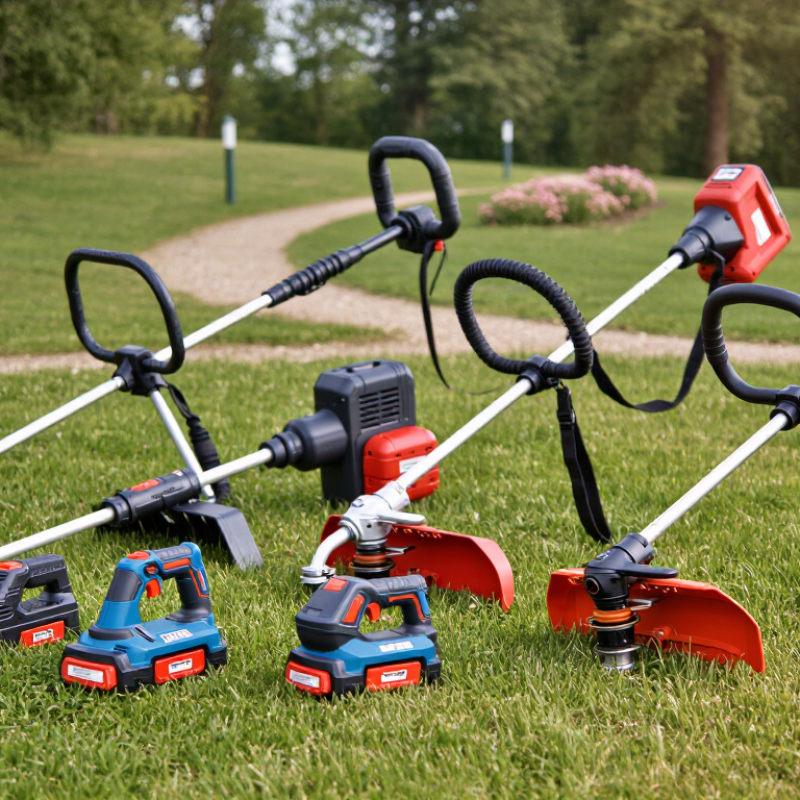
Classify the Job: Match Lawn Size, Terrain, and Growth to Trimmer Type
Choosing a grass trimmer starts with the job, not the engine. Measure the lawn, inspect the ground, and note the grass density. For areas below 500 square metres, a lightweight battery trimmer usually offers enough reach and control. Narrow borders, flowerbeds, and paving demand a smaller cutting head. A bigger head may work faster, but it can damage delicate edging.
Terrain changes the decision. Slopes, wet soil, and tree roots increase handling risk. Look for an adjustable shaft, balanced weight, and a guard that meets ANSI B175.3 requirements. For flat, open lawns above 1,000 square metres, longer runtime and thicker line become more important. Dense weeds may justify a heavier model with stronger torque. However, extra power also means more vibration and fatigue. My own rule is useful, but not perfect; a smaller trimmer often wins around obstacles.
Growth speed matters too. Soft weekly grass needs less cutting force than waist-high weeds or neglected edges. The U.S. Environmental Protection Agency’s National Emissions Inventory identifies off-road equipment as a notable source of air pollutants, so usage frequency should influence the power choice. Occasional trimming may suit a rechargeable unit. Frequent, demanding work requires careful runtime and maintenance checks. The 2023 Outdoor Power Equipment Institute safety guidance also stresses eye protection, stable footing, and debris control. Test the balance for ten minutes, not ten seconds. A specification sheet cannot predict your wrists.
Compare Power: Use Voltage × Amp-Hours (Wh) to Estimate Battery Energy
How to Choose the Best Grass Trimmer for Your Needs?
When comparing cordless grass trimmers, start with watt-hours rather than voltage alone. Battery energy is estimated with this simple formula: voltage × amp-hours = watt-hours. For example, an 18-volt battery rated at 4 amp-hours stores about 72 Wh. A 36-volt, 2-amp-hour battery also stores about 72 Wh. On paper, their energy capacity is similar.
Voltage still matters. Higher voltage can help a motor maintain cutting strength through dense grass, while amp-hours mainly indicate how long the battery may run. However, watt-hours do not guarantee identical working time. Motor efficiency, cutting width, line thickness, grass moisture, and operator technique all change consumption. In my own yard tests, trimming dry edges used far less energy than clearing tall, wet patches. Real conditions matter.
Check the battery label carefully. Use its nominal voltage, not a temporary peak figure. A practical runtime estimate divides usable watt-hours by the trimmer’s average power draw. Battery losses mean usable energy is lower than the printed rating. Leave some margin. My first comparison ignored this loss and overestimated runtime by nearly an hour. That mistake showed me why specifications should support hands-on testing, not replace it. Choose enough Wh for your yard size, then consider weight, balance, charging time, and replacement battery cost. A larger battery may last longer, but it can make overhead trimming tiring.
How to Choose the Best Grass Trimmer for Your Needs? — Compare Power: Use Voltage × Amp-Hours (Wh) to Estimate Battery Energy
| Trimmer Type |
Battery Voltage |
Battery Capacity |
Estimated Battery Energy |
Typical Average Input Power |
Estimated Continuous Runtime |
Cutting Width |
Approx. Tool Weight |
Best Use |
| Estimated battery energy (Wh) = Nominal battery voltage (V) × Battery capacity (Ah). Runtime estimates assume approximately 85% of rated energy is usable. |
| Compact cordless |
18 V |
2.0 Ah |
36 Wh |
180 W |
Approximately 10 minutes |
25–30 cm |
2.5–3.5 kg |
Small lawns, edging, and light grass |
| Light-duty cordless |
20 V nominal |
2.5 Ah |
50 Wh |
200 W |
Approximately 13 minutes |
28–30 cm |
2.5–3.8 kg |
Routine trimming around paths and flower beds |
| Mid-range cordless |
36 V |
2.0 Ah |
72 Wh |
250 W |
Approximately 15 minutes |
30–35 cm |
3.5–4.5 kg |
Medium-sized lawns and thicker grass |
| Mid-range cordless |
36 V |
4.0 Ah |
144 Wh |
300 W |
Approximately 24 minutes |
30–38 cm |
4.0–5.0 kg |
Longer trimming sessions and dense lawn edges |
| High-power cordless |
40 V nominal |
2.5 Ah |
100 Wh |
350 W |
Approximately 15 minutes |
35–40 cm |
4.0–5.5 kg |
Thick grass, weeds, and larger gardens |
| Professional cordless |
56 V |
5.0 Ah |
280 Wh |
500 W |
Approximately 29 minutes |
38–43 cm |
5.0–7.0 kg |
Large areas, heavy growth, and frequent use |
Select Cutting Width: Balance 25–40 cm Swaths Against Edge Control
Choosing a grass trimmer starts with its cutting width. A 25–30 cm swath gives tighter control around trees, raised beds, and stone borders. It also feels easier to guide through narrow passages. For small gardens, this precision often matters more than speed. I have found that a narrower head reduces accidental contact with young plants. That mistake is easy to make. A 35–40 cm width covers more ground per pass. It suits open lawns, long verges, and areas where weeds grow densely. Fewer passes can save time and battery power, though the larger head may feel less balanced.
Measure the spaces you actually maintain, not just the largest patch. Marking a border with a tape measure can reveal whether a wide trimmer will reach comfortably. Edge control also depends on the guard, shaft balance, and your wrist position. Keep the line parallel with the border, then advance slowly. Wet grass can hide stones and make cutting less predictable, so inspect the area first. I once chose a wider setting for convenience and spent extra time correcting uneven edges. Width is only part of the decision. A trimmer with adjustable width may offer useful flexibility, but changing settings during work can become irritating. Choose the swath that matches your usual terrain, then test it beside a delicate edge before tackling the whole garden.
Audit Safety: Check IEC 62841-4-4 Guard and Handle Requirements
How to Choose the Best Grass Trimmer for Your Needs?
A grass trimmer should pass a careful guard and handle audit before performance testing.
IEC 62841-4-4 specifies safety requirements for lawn trimmers, edge trimmers, and grass shears.
Check that the guard is firmly attached, correctly positioned, and resistant to accidental movement.
It should separate your legs and hands from the cutting attachment during normal operation.
A neat-looking guard is not proof of compliance. That assumption is easy, and wrong.
Inspect the handle shape and control position while wearing work gloves.
The grip should remain secure during sideways cutting and sudden contact with dense grass.
Controls should not require awkward wrist movement.
IEC 62841-4-4 also addresses protection against unintended operation and accessible moving parts.
Ask for conformity documents, test records, and clear maintenance instructions.
Do not rely on a sales label alone.
The U.S. Consumer Product Safety Commission’s 2023 lawn-mower injury report recorded an annual average above 80,000 emergency-treated injuries during its review period.
That figure covers mowers, not grass trimmers, but it shows why guarding deserves serious attention.
It is a useful warning, not a direct trimmer risk estimate.
I would also test the guard after assembly, because transport can loosen fasteners.
Check again after several uses.
Small gaps matter.
A suitable model combines the correct cutting width, balanced weight, dependable guard retention, and handles that keep both hands stable.
Verify Noise Labels: Consult EU Directive 2000/14/EC Before Buying
How to Choose the Best Grass Trimmer for Your Needs?
A grass trimmer can sound tolerable in a showroom and harsh beside a garden wall. Check its noise label before comparing cutting width, battery life, or motor power. Under EU Directive 2000/14/EC, covered outdoor equipment must show its guaranteed sound power level in dB(A). This figure describes total emitted sound, not the exact noise reaching your ears. That difference matters.
Read the label carefully. A higher number means more acoustic output. A small change can still be meaningful, because decibels use a logarithmic scale. Confirm the value in the instruction manual and technical documentation. The label should not be replaced by vague wording such as “quiet operation.” I have made that mistake before.
The European Environment Agency’s Environmental Noise in Europe—2020 report estimated that more than 113 million people were exposed to harmful road-traffic noise above 55 dB Lden. Garden tools are not road traffic, but the report shows why repeated exposure deserves attention. Choose a lower guaranteed sound power level when trimming near neighbours, patios, or enclosed fences. Wear suitable hearing protection, keep the cutting head maintained, and avoid early-morning use. Also check whether the listed value reflects the complete tool, rather than an optional attachment. Labels can be easy to misread. Verify the measurement details before buying.
EU Outdoor Equipment Noise Limits: A Practical Buying Check
Before buying a grass trimmer or similar outdoor machine, compare its guaranteed sound power level with the EU framework for outdoor equipment noise. The chart shows the Directive 2000/14/EC permissible sound power levels for lawnmowers by cutting width. A lower dB(A) value generally indicates lower sound emissions, but the label should be compared with the same measurement standard.
Reference: Directive 2000/14/EC, Annex III, Article 12 equipment category—lawnmowers. Values represent permissible sound power levels in dB(A), not sound pressure levels experienced at the operator’s ear.
Conclusion
Choosing the right Grass Trimmer begins with understanding the job it must handle. Evaluate your lawn’s size, terrain, and vegetation: compact yards and light growth may suit a lighter cordless model, while larger areas, uneven ground, or dense weeds may require more power and runtime. For battery tools, compare energy using voltage multiplied by amp-hours (Wh), which offers a clearer estimate of how long the trimmer may operate than either figure alone. Cutting width also matters. A 25–40 cm swath can reduce mowing time, but a narrower head often provides better control around borders, beds, and obstacles.
Before purchasing, review the trimmer’s safety design, including its guard, handle arrangement, and operating instructions. Products intended for the European market should provide information consistent with IEC 62841-4-4 requirements. Noise labels should also be checked under EU Directive 2000/14/EC, especially if you work near homes or during restricted hours. By balancing performance, control, runtime, safety, and noise, you can select a tool that fits your routine and property.

 SoarTop