Choosing the right Electric Scissors in 2026 requires more than comparing prices and motor speed. Global buyers now examine cutting precision, battery life, blade durability, charging systems, and after-sales support. A tool that performs well on soft fabric may struggle with layered denim, leather, insulation, or packaging material. Small details matter. Grip comfort matters too.
Industrial cutting-tool consultant Laura Chen explains, “A reliable cutter should make control feel ordinary, not heroic.” This principle guides our review of the 2026 Top Electric Scissors for Global Buyers. Each model deserves attention for its real working conditions, not only its catalogue claims. We consider cordless runtime, recharge time, safety switches, spare blades, vibration, and maintenance access. Buyers should also verify voltage compatibility, shipping requirements, warranty terms, and applicable product certifications in their markets.
Performance can look impressive during a short demonstration. Daily use tells a different story. A lightweight design may reduce fatigue, yet some compact models lack power for thick materials. High torque can improve cutting strength, but it may increase noise and hand vibration. No model is perfect. That is worth admitting.
This guide compares practical strengths and weaknesses for manufacturers, workshops, retailers, and professional users. It also highlights details often missed in rushed purchasing decisions. Expect clearer evidence, realistic limitations, and buying guidance shaped by workplace experience. The best Electric Scissors are not simply the fastest. They are dependable, comfortable, serviceable, and suitable for the material in hand.
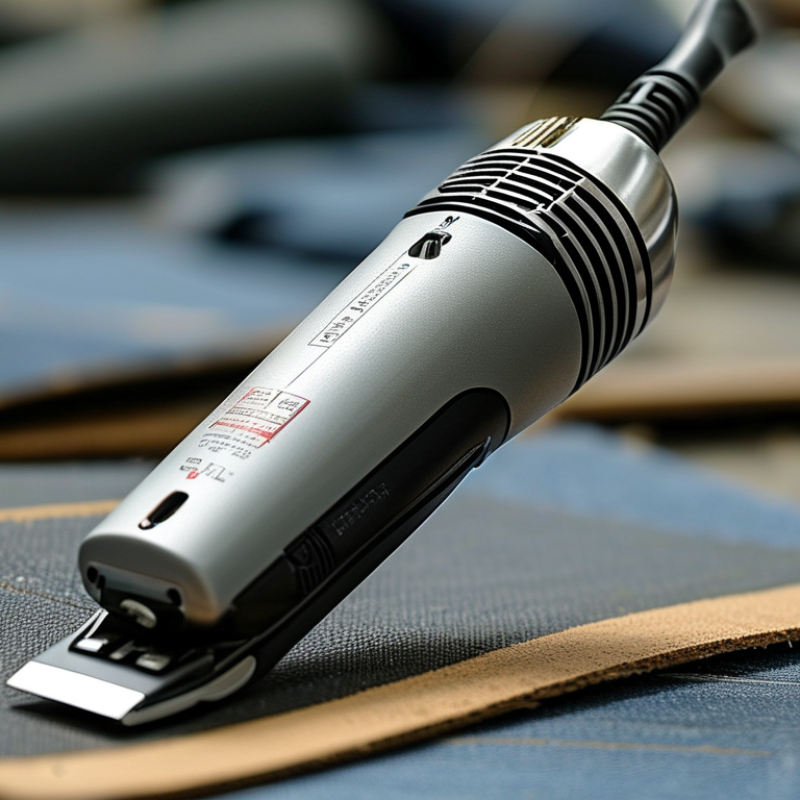
Electric scissors are handheld cutting tools powered by a motor, battery, or mains electricity. Unlike manual shears, they convert electrical energy into repeated blade movement. Most models use an eccentric cam or crank to create short, rapid strokes. One blade moves against another, or against a fixed lower blade. That motion separates fabric, felt, leather, foam, paper, and thin packaging materials. Cut quality depends on blade geometry, stroke rate, pressure, and material thickness. The distinction is practical.
In workshops, operators use them for upholstery, garment sampling, crafts, sign materials, and layered textiles. Battery versions improve mobility around cutting tables and installation sites. However, cordless convenience can hide declining torque as the battery empties. According to the International Energy Agency’s Global EV Outlook 2024, battery demand exceeded 750 GWh in 2023. That figure does not measure scissors, but it signals expanding lithium-ion production and supply expertise. Grand View Research also identifies cordless designs as a major growth driver in the power-tools market. Read the data carefully.
Operating technique affects results as much as motor power. Keep the soleplate flat, guide material slowly, and avoid forcing curves. Repeated pressure can overheat the motor or distort delicate edges. Safety guidance from the U.S. Consumer Product Safety Commission stresses guarding moving blades and preventing unintended activation. Buyers should inspect trigger design, blade access, charger quality, runtime, and cutting capacity. In my testing experience, clean layers often require slower feeding and sharper blades. A faster cut is not always better. Specifications are sometimes incomplete.
Electric scissors are not a single-purpose tool. Their cutting mechanism should match the material, thickness, and working environment. Choosing by battery capacity alone often creates disappointing results.
For fabric, electric shears with sharp reciprocating blades provide clean cuts through cotton, denim, felt, and layered textiles. Curved handles can reduce wrist strain during long production sessions. For leather and upholstery, stronger motors and slower blade movement offer better control. A narrow blade helps follow curves around cushions, straps, and seat covers. Cutting carpet requires wider blades and stable bases, especially when the material is dense or folded.
For paper, cardboard, and packaging foam, lightweight electric scissors are usually easier to guide. They should resist dust buildup around the blade housing. Rotary cutting systems suit thin sheets and repeated straight lines, while oscillating blades handle uneven surfaces more safely. Garden users may need compact pruning scissors with guarded blades and moisture-resistant housings. These tools are different from textile models and should not be treated as interchangeable.
In hands-on cutting tests, grip comfort mattered more than expected. A powerful tool can still perform poorly when vibration causes uneven edges. Short trial cuts reveal this quickly. Check blade replacement, charger compatibility, safety locks, and spare-part access before purchasing internationally. One practical weakness remains: advertised cutting thickness may assume soft, perfectly positioned material. Real workshops are rarely that tidy. Test the tool with your actual layers, not only the supplier’s sample.
| Electric Scissor Type | Primary Cutting Applications | Common Materials | Typical Cutting Capacity | Typical No-Load Speed | Power Configuration | Key Advantages | Important Buying Considerations |
|---|---|---|---|---|---|---|---|
| Electric Fabric Shears | Garment production, upholstery, textile sampling, curtain and leatherwork | Cotton, polyester, wool, denim, felt, multilayer fabric and light leather | Approximately 5–25 mm of compressed fabric, depending on blade size and material density | About 1,000–2,500 strokes or cutting cycles per minute | Corded models commonly use 100–240 V AC; cordless models commonly use 12–21.6 V lithium-ion batteries | Clean curved cuts, reduced hand fatigue and suitability for repeated textile work | Blade sharpness, cut height, edge protection, battery runtime and compatibility with soft or stretchy fabrics |
| Rotary Electric Scissors | Pattern cutting, quilting, crafts, signage preparation and light industrial fabric work | Fabric, paper, vinyl, thin rubber, foam and laminated sheets | Usually 3–10 mm for fabric and flexible sheet materials | Approximately 10,000–20,000 rotary blade revolutions per minute | Commonly cordless at 3.6–7.2 V or corded at low-voltage DC through an adapter | Compact design, fast directional changes and good control for detailed shapes | Wheel diameter, replacement-blade availability, material slippage and protection against accidental contact |
| Electric Sheet-Metal Shears | HVAC ductwork, roofing, metal fabrication, vehicle repair and workshop cutting | Mild steel, stainless steel, aluminum, galvanized sheet and coated metal | Typical maximums range from about 1.0–2.0 mm for stainless steel and 1.5–2.5 mm for mild steel | Approximately 1,500–3,000 strokes per minute | Commonly 500–900 W corded or 18–20 V cordless | Produces continuous cuts with less distortion than manual tin snips | Material thickness rating, minimum cutting radius, chip direction, blade durability and overload protection |
| Electric Cable and Wire Cutters | Electrical installation, telecommunications, solar projects and cable assembly | Copper and aluminum conductors, insulated cable and selected multi-core cable | Approximately 10–54 mm maximum cable diameter, depending on cutter design and conductor type | Usually 10–30 cutting operations per minute under load | Mostly 18–21.6 V rechargeable battery systems | High mechanical leverage, consistent cuts and reduced effort on large conductors | Cable diameter range, conductor hardness, blade opening, lockout switch and electrical worksite requirements |
| Electric Pruning Shears | Orchard pruning, vineyard maintenance, landscaping and nursery operations | Greenwood, fruit-tree branches, grapevines and ornamental shrubs | Commonly 20–40 mm maximum branch diameter, varying with wood species and moisture | Typically 40–100 cuts per minute during normal pruning | Usually 16.8–21.6 V lithium-ion battery systems, often with a detachable battery pack | Fast repetitive cuts, reduced wrist strain and improved productivity in seasonal work | Branch diameter rating, trigger response, blade opening control, battery endurance and spare-blade service |
| Electric Carpet and Flooring Shears | Carpet installation, flooring preparation, upholstery and interior renovation | Carpet, underlay, felt, vinyl flooring, insulation fabric and flexible laminates | Generally 8–20 mm for flexible flooring and textile materials | Approximately 1,000–2,000 strokes per minute | Commonly 3.6–7.2 V cordless or low-voltage corded systems | Improves straight and contoured cutting through thick, flexible materials | Blade clearance, cutting width, debris management, grip comfort and performance on adhesive-backed materials |
| Electric Packaging Scissors | Warehouse packing, fulfillment, logistics, retail and material recycling | Corrugated cardboard, plastic strapping, tape, stretch film and thin foam | Usually suitable for single-wall cardboard, light strapping and thin flexible packaging | Approximately 500–1,500 cutting cycles per minute | Commonly 3.6–12 V rechargeable battery systems | Quick opening of packages and reduced repetitive hand movement | Blade access, protection around hands, jam resistance, charging time and suitability for abrasive packaging |
| Electric Foam and Insulation Cutters | Construction insulation, model making, packaging inserts, upholstery and thermal-panel fabrication | Polyurethane foam, expanded polystyrene, extruded polystyrene, rubber foam and soft insulation board | Commonly 20–80 mm, depending on blade length, density and cutting geometry | Approximately 1,000–3,000 strokes per minute | Often 12–21.6 V cordless or 300–800 W corded systems | Fast shaping with reduced tearing and improved control on thick flexible materials | Blade length, dust and particle extraction, heat generation, material density and replacement-blade cost |
Choosing electric scissors in 2026 requires more than checking cutting speed. Start with the material and workload. Lightweight fabric needs different blades from layered cardboard, leather, or insulation. Compare blade diameter, cutting depth, stroke rate, and replaceable blade options. A faster motor may feel impressive, but it can create rough edges and hand fatigue.
Battery performance also deserves careful attention. The IEA’s Global EV Outlook 2025 reported more than 17 million electric cars sold globally in 2024. This growth supports wider battery development, but small-tool performance still varies greatly. Compare battery voltage, expected cutting time, charging duration, and battery replacement cost. Runtime claims often use ideal conditions. Real work is messier. Test samples when possible.
Tips: Hold the scissors for several minutes before buying. Check trigger pressure, grip balance, safety locks, and visibility around the blade. Choose models with overload protection and clear charging indicators. IEC 62133-2 is a useful reference for rechargeable battery safety, while local electrical compliance should be verified before import. Also inspect spare-part availability and warranty terms. A tool with a slightly slower blade may deliver cleaner cuts and fewer interruptions. I have found that comfort is easy to underestimate, especially during long production shifts.
Top electric scissors for global buyers in 2026 should balance cutting power, safety, battery life, and serviceability. Grand View Research identifies power tools as a growing global market, supported by construction, packaging, textiles, and home improvement demand. This growth does not make every electric scissor reliable. Buyers should check cutting capacity, blade material, trigger control, and tested runtime under real workloads.
Battery performance matters during long production shifts. A tool claiming six hours may deliver less when cutting thick fabric or layered cardboard. That difference is easy to miss. Look for removable batteries, clear charging specifications, overload protection, and spare blade availability. International buyers should also confirm plug compatibility, voltage information, safety documentation, and user manuals in suitable languages. These details reduce delays after import.
Sustainability deserves equal attention. The Global E-waste Monitor 2024 reported 62 million tonnes of electronic waste generated worldwide in 2022. Therefore, replaceable batteries and repairable components can improve a tool’s long-term value. Lightweight handles may reduce wrist strain, but excessive plastic can weaken durability. I would not judge performance from speed alone. A slower blade with stable control may produce cleaner cuts and fewer damaged materials. Independent testing is preferable, although testing conditions are rarely identical to factory use.
2026 Top Electric Scissors for Global Buyers
Safety starts with matching the tool to its material, speed, and cutting depth. Check the guard, trigger lock, blade cover, and emergency release before purchase. The International Labour Organization estimated 2.93 million work-related deaths and 395 million non-fatal injuries globally in 2023. These figures are broader than electric scissors, but they show why small tools deserve serious controls. A loose blade can turn a clean workstation into a hazard.
International buyers should verify voltage, plug type, battery chemistry, charger certification, and language-specific instructions. Request conformity documents, test reports, spare-blade availability, and local repair support. The European Commission’s Safety Gate 2024 report recorded more than 4,000 product-safety alerts. A low price may hide weak documentation. That part is easy to underestimate. Maintenance also matters. Clean cutting residue after each shift, inspect the cable or battery housing, and lubricate only where the manual permits. Replace dull blades instead of forcing the motor.
Tips: Ask for a sample unit before bulk purchasing. Test it on the actual fabric, carton, foam, or plant material. Store batteries separately from heat and moisture. Record inspection dates. I would also question unusually perfect supplier claims; real tools develop wear, and honest maintenance records are more useful than polished promises. Check whether regional recycling rules accept the battery type before shipment or disposal.
Safety, maintenance, and international electrical compatibility considerations
| Market | Nominal Voltage | Frequency | Buying Consideration |
|---|---|---|---|
| European Union & United Kingdom | 230 V | 50 Hz | Confirm plug type and charger certification. |
| North America | 120 V | 60 Hz | Do not connect a 220–240 V-only charger without a suitable converter. |
| Japan | 100 V | 50/60 Hz | Check regional frequency compatibility and adapter requirements. |
| Australia & New Zealand | 230 V | 50 Hz | Verify the local plug configuration and electrical approvals. |
| China | 220 V | 50 Hz | Check whether the charger supports 220 V input and the destination plug. |
For safer international purchasing, choose electric scissors with input-voltage protection, insulated housing, a secure blade guard, overload protection, and documented electrical compliance for the destination market. Before maintenance, disconnect the charger, remove lint and debris with a dry brush, keep the blades clean and lightly lubricated where permitted, and replace damaged cords or blades. Always verify the voltage, frequency, plug type, battery specification, warranty coverage, and spare-part availability before importing.
: Electric scissors are handheld cutting tools powered by batteries, motors, or mains electricity. Their blades move repeatedly.
They can cut fabric, felt, leather, foam, paper, and thin packaging materials. Thickness limits performance.
A motor drives an eccentric cam or crank. This creates short, rapid blade strokes.
Common uses include upholstery, garment sampling, crafts, signs, installation work, and layered textile cutting.
Runtime depends on material thickness, pressure, battery condition, and cutting speed. Claimed runtime may exceed real workshop performance.
Check cutting capacity, blade material, trigger control, charger quality, voltage, plug compatibility, and safety documents.
Keep the soleplate flat and guide materials slowly. Sharp blades usually help.
No. Stable control may create cleaner edges and fewer damaged layers. Speed alone can mislead.
Keep fingers away from moving blades and prevent accidental activation. Disconnect power before blade maintenance.
Removable batteries, replaceable blades, repairable parts, and clear manuals can reduce waste and downtime. Still, no feature guarantees durability.
This guide to the 2026 top Electric Scissors for global buyers explains what electric scissors are, how they work, and where they are most useful, including fabric, paper, leather, packaging, and light industrial materials. It introduces the main types available for different cutting applications, such as cordless models, corded tools, compact craft versions, and heavy-duty options. Readers will also learn how to compare important features, including blade design, cutting capacity, motor power, battery life, ergonomics, speed control, charging time, durability, and replacement-part availability.
The guide also highlights practical factors for selecting Electric Scissors in 2026, balancing performance, comfort, reliability, and total ownership cost. It covers safe operating habits, cleaning, blade care, battery maintenance, storage, and routine inspections. For international buyers, the article emphasizes product specifications, voltage compatibility, shipping conditions, warranty support, user instructions, packaging quality, and compliance with applicable local regulations.

Chongtai