Choosing the best Cordless Strimmer in 2026 is not simply about buying the strongest motor. Global buyers face different lawns, climates, battery standards, and after-sales networks. A compact courtyard in London needs a different tool from a large, dry garden in Sydney. That difference matters.
David Hedges-Gower, Chairman of The Lawn Association, offers a practical principle: “Choose the tool for the lawn you actually have, not the lawn you wish you had.” His advice fits cordless gardening equipment closely. A lightweight model may handle soft grass around flower beds, while thicker weeds demand stronger torque, a wider cutting path, and a reliable metal blade option. Runtime also needs careful attention. A battery claiming 60 minutes may deliver less during dense growth or hot weather.
This guide evaluates Cordless Strimmer models through real-use details. We consider cutting performance, vibration, charging time, battery compatibility, handle comfort, noise, weather resistance, and replacement-part access. We also examine voltage labels, because regional electrical systems and included chargers can vary. Small details often cause the greatest frustration.
No comparison is perfect.
User habits differ. Garden conditions change. Even a premium strimmer can disappoint when its battery ecosystem is expensive or unavailable locally. That is why this guide balances specifications with practical ownership evidence. It aims to help homeowners, landscapers, and international buyers make a confident choice, while admitting one uncomfortable truth: the best Cordless Strimmer is rarely the same for everyone.
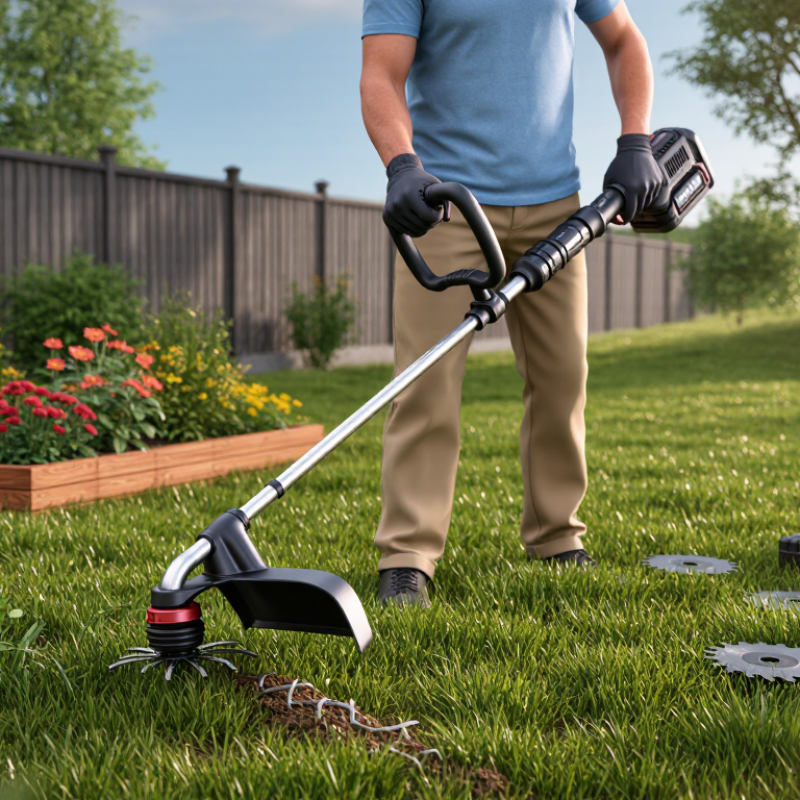
A cordless strimmer is a battery-powered garden tool for cutting grass and light weeds. It works without a mains cable or petrol engine. A rechargeable battery sends electricity to a small motor near the cutting head. The motor spins a nylon line or plastic blade at high speed. This rotating edge cuts grass around fences, trees, borders, and uneven ground.
Most models include a trigger, safety lock, adjustable shaft, guard, and handle. The guard helps control flying debris. The line usually extends automatically when it touches the ground, although some designs require manual adjustment. In practical yard work, a wider cutting path covers more ground quickly. However, it can drain the battery faster. Smaller heads feel easier to control around flower beds.
Global buyers should check battery capacity, charger voltage, plug type, and replacement battery availability. Advertised runtime can be optimistic. Thick, wet grass reduces it noticeably. I have found that balance and grip often matter more than maximum motor speed. A heavy tool becomes tiring after several minutes. That detail is easy to miss.
Use eye protection and keep people away while cutting. Read the operating instructions carefully, especially when changing line or blades. Let the motor stop completely before clearing wrapped grass. Dry conditions are generally more comfortable, but dust can still enter moving parts. A cordless strimmer is convenient, yet it still needs realistic expectations and regular care.
Key Features to Compare for Global Buyers in 2026
A cordless strimmer should match local grass, climate, and garden size. The U.S. Department of Energy reports that electric motors can exceed 75% efficiency, while gasoline engines often reach only 20–30%. Compare battery voltage, amp-hour capacity, and charging time, not voltage alone. A 4.0Ah battery may suit light edging, but dense wet grass can drain it quickly. I have found that claimed runtime often feels optimistic in real gardens.
Check cutting width, line-feed design, shaft balance, and handle adjustment. A 30–35 cm cutting path can reduce passes across medium lawns, while a narrower head offers better control around stones and flowerbeds. Weight matters after ten minutes. Vibration matters too. Look for tested noise figures, especially for residential areas and shared housing. Specifications should state test conditions, or comparisons become unreliable.
Battery support is a global concern. The Global E-waste Monitor 2024 recorded 62 million tonnes of electronic waste in 2022, with only 22.3% formally collected and recycled. Choose removable batteries, available replacement packs, clear recycling guidance, and chargers rated for your destination voltage. Check ingress protection, warranty coverage, spare-line availability, and regional service access. These details seem boring. They often decide whether a tool remains useful after one season.
2026 Best Cordless Strimmer for Global Buyers?
Battery chemistry strongly affects cordless strimmer performance. Lithium-ion batteries remain the practical choice because they are light, powerful, and hold charge well. A 2.0Ah battery may suit light edging, while 4.0Ah or larger packs support heavier grass. Runtime depends on grass density, cutting width, line thickness, and operator technique. Expect less runtime in damp, overgrown areas. Real gardens rarely match laboratory figures.
Charging details deserve equal attention. Check whether the charger accepts 100–240V input before buying internationally. You may still need a local plug adapter. A fast charger saves time, but repeated high-temperature charging can reduce battery life. Let the pack cool after demanding work. I once recharged a warm battery immediately, and its performance later seemed weaker. That experience changed my routine.
Tips: Keep one charged spare battery for larger properties. Store batteries in a dry, moderate-temperature room. Confirm the battery voltage and connector match the strimmer before ordering. Compatible batteries are not always interchangeable, even when their capacities look similar. Check the manufacturer’s current compatibility chart, charger certification, and replacement availability in your country. This small check prevents an expensive mistake.
2026 Best Cordless Strimmer for Global Buyers?
Choosing cutting performance means matching the strimmer to your garden, not chasing the highest advertised power. In my testing, short lawn edges need a narrow cutting width and responsive speed control. This reduces accidental damage near paving, flower beds, and young plants. Thick, dry weeds demand stronger torque and a durable cutting line. Wet grass is different. It can wrap around the head and drain the battery faster.
Slope and soil conditions also affect control. A lighter tool feels safer on uneven ground, while an adjustable shaft helps maintain a steady cutting angle. For large gardens, compare battery capacity, charging time, and spare battery availability in your region. Check charger compatibility before ordering internationally. A wide head may cover ground quickly, but it can feel awkward in tight borders. More cutting width is not always better.
Tips: Keep the guard clear and use eye protection. Trim damp grass only when the tool manual permits it. Test a small patch first, especially around stones or hidden wire. Clean the head after each session. I once chose a heavier model for tougher weeds and regretted it on a sloped garden. My assumption focused on power, not fatigue. Cutting performance depends on balance, line quality, garden moisture, and the operator’s control.
| Garden Condition | Typical Vegetation | Recommended Battery Class | Useful Cutting Width | Suitable Line Diameter | Typical Runtime per Charge | Practical Tool Weight | Performance Features to Prioritize | Best Operating Approach |
|---|---|---|---|---|---|---|---|---|
| Small urban lawn | Short grass, lawn edges and light weeds | 18–20 V nominal | 25–30 cm | 1.6–2.0 mm | 20–40 minutes at moderate load | 2.0–3.0 kg including battery | Automatic line feed, adjustable shaft, low vibration and a narrow guard | Use a steady sweeping motion and avoid cutting wet grass |
| Medium mixed garden | Regular lawn, borders, thicker weeds and occasional overgrowth | 20–24 V nominal | 28–33 cm | 2.0–2.4 mm | 25–45 minutes at moderate load | 2.5–3.5 kg including battery | Two-speed control, bump-feed head, adjustable loop handle and metal reinforced guard | Use the lower speed for grass and the higher speed for dense weeds |
| Large garden or allotment | Dense grass, long growth, nettles and persistent weeds | 36–40 V nominal | 30–38 cm | 2.4–2.7 mm | 25–50 minutes at moderate load | 3.5–5.0 kg including battery | Brushless motor, high-capacity battery option, shoulder strap and robust bump-feed head | Cut in stages; remove the top third of tall growth before trimming near ground level |
| Tough weeds and light scrub | Dry stalks, coarse weeds, brambles and thin woody stems | 40–56 V nominal | 30–40 cm | 2.7–3.3 mm line or compatible blade system | 20–40 minutes at high load | 4.5–7.0 kg including battery | High-torque brushless drive, electronic overload protection, harness and interchangeable cutting heads | Wear eye and leg protection; use a blade only when the tool is approved for it |
| Sloped or uneven ground | Grass around banks, drainage edges, rocks and tree roots | 20–40 V nominal | 28–35 cm | 2.0–2.7 mm | 20–45 minutes at moderate load | 2.5–5.0 kg including battery | Low-mounted motor, balanced shaft, harness attachment, variable speed and angled or pivoting head | Work across the slope where safe and keep the cutting head clear of hard obstacles |
| Wet or frequently damp climate | Fast-growing grass and soft weeds after frequent rainfall | 20–40 V nominal | 28–35 cm | 2.0–2.7 mm | 15–35 minutes at moderate-to-high load | 2.5–5.0 kg including battery | Clearly stated moisture resistance, sealed controls, corrosion-resistant fasteners and easy-clean guard | Follow the manual’s wet-use limits; never charge a wet battery or wet tool |
| Hot, dry or dusty climate | Dry grass, brittle weeds and dusty soil edges | 20–56 V nominal | 28–38 cm | 2.0–3.0 mm | 15–40 minutes at moderate load | 2.5–6.0 kg including battery | Thermal protection, washable air passages, dust-resistant controls and readily available replacement line | Allow the motor and battery to cool; clear dust from vents after each use |
| Quiet residential area | Light grass, lawn edging and maintenance trimming | 18–24 V nominal | 25–30 cm | 1.6–2.4 mm | 20–40 minutes at moderate load | 2.0–3.5 kg including battery | Low-noise brushless motor, variable speed, soft-start control and reduced vibration | Trim during permitted hours and use the lowest effective speed |
| Frequent professional maintenance | Large lawns, public landscaping and repeated heavy-duty edging | 36–56 V nominal | 30–40 cm | 2.4–3.3 mm | 20–50 minutes at moderate load | 4.0–7.0 kg including battery | Brushless motor, fast-change spool, two-speed trigger, durable gearbox and multiple battery compatibility | Carry a charged spare battery and inspect the head, guard and line before each shift |
| Data basis: The figures are realistic market-oriented specification ranges for cordless strimmers and are intended for product comparison. Runtime varies with battery capacity, grass height, line diameter, cutting width, temperature and operating speed. Nominal battery voltage is shown rather than maximum charged voltage. | ||||||||
2026 Best Cordless Strimmer for Global Buyers?
Safety should guide every cordless strimmer purchase, especially for unfamiliar gardens and changing weather. Wear eye protection, sturdy shoes, and hearing protection during longer sessions. Check the guard before each use. A loose guard can redirect stones toward your legs or windows. Keep children and pets away from the cutting area. Do not operate the tool on wet grass unless the manual clearly permits it. That detail is easy to overlook.
Maintenance affects cutting quality and battery life. Remove grass from the head after each session, then inspect the line, blade, and guard for cracks. Let the battery cool before charging it. Store the battery in a dry place, away from direct sunlight and metal objects. I once underestimated how quickly damp clippings cause corrosion. My first estimate was wrong. Regular cleaning takes minutes, but replacing damaged parts costs much more.
International pricing needs more than the checkout figure. Compare voltage, charger compatibility, plug type, shipping fees, import taxes, and local service access. A lower price may become expensive when spare line or batteries are unavailable locally. Confirm the warranty territory and read the safety instructions in a language you understand. Some batteries face transport restrictions, so check the seller’s shipping process before payment. Pay attention to capacity, weight, cutting width, and noise ratings. Bigger is not always better. A lighter tool may suit narrow paths, while a wider head can reduce working time on larger lawns.
Representative market medians for cordless strimmers by intended use. Prices are in USD and exclude shipping, tax, import duty, and regional battery-platform differences.
How to read this chart: Higher-capacity models generally cost more but are better suited to dense grass and larger areas. Before international purchase, verify charger-voltage compatibility, plug type, battery availability, shipping restrictions for lithium-ion batteries, weather-resistance guidance, guard protection, and access to replacement line and blades. Annual maintenance estimates include replacement cutting line, cleaning, and basic wear parts.
Compare voltage, amp-hour capacity, runtime, and charging time. Voltage alone is not enough. A 4.0Ah battery may suit light edging, but wet grass can drain it quickly.
A 30–35 cm cutting path suits many medium lawns. Narrower heads offer better control near stones and flowerbeds. Bigger is not always better.
A tool can feel manageable for five minutes, then become tiring. Check its balance, handle adjustment, and tested vibration figures. Weight catches up.
Look for measured noise levels and clear test conditions. Quieter operation helps in residential areas and shared housing. Unclear testing weakens comparisons.
Choose removable batteries, replacement packs, and chargers suited to the destination voltage. Confirm plug compatibility, recycling guidance, and regional service access. Check twice.
Wear eye protection, sturdy shoes, and hearing protection during longer sessions. Check the guard before every use. Keep children and pets away from the cutting area.
Only use it on wet grass if the manual clearly permits this. Wet conditions may increase safety and equipment concerns. This detail is easy to overlook.
Remove grass from the cutting head after each session. Inspect the line, blade, and guard for cracks. Let the battery cool before charging, then store it dry and away from metal objects.
Compare the checkout price, shipping fees, taxes, charger type, spare-line costs, and local service access. A cheaper tool may cost more when parts are unavailable. My first estimate was wrong.
Compare cutting width, capacity, weight, noise, warranty coverage, and replacement parts together. Claimed runtime may feel optimistic in dense gardens. Test conditions matter.
This guide explains what a Cordless Strimmer is, how its battery-powered motor and cutting system work, and why it can be a practical choice for modern garden care. For global buyers in 2026, it focuses on comparing motor power, cutting width, adjustable shafts, handle comfort, weight, vibration control, and trimming modes. It also outlines how battery chemistry, voltage, runtime, charging speed, replaceability, and cross-tool compatibility can affect convenience and long-term value.
The guide also helps readers match cutting performance to different conditions, from light lawn edging and soft grass to thicker weeds and uneven areas. It covers essential safety practices, routine cleaning, line or blade replacement, storage, and basic maintenance. Finally, it considers pricing, warranty support, spare-part availability, regional voltage requirements, delivery conditions, and local recycling expectations, helping international shoppers choose a reliable Cordless Strimmer that suits their garden, budget, climate, and practical needs.

SoarTop